First Pterosaurs with specialized feeding (Dorygnathus). First sauropod dinosaurs. Diversification in small, ornithischian dinosaurs: heterodontosaurids, fabrosaurids, and scelidosaurids.
195 Million (1950 Lakhs) of years ago
190 Million (1900 Lakhs) of years ago
Pliosauroids appear in the fossil record. First lepidopteran insects (Archaeolepis), hermit crabs, modern starfish, irregular echinoids, corbulid bivalves, and tubulipore bryozoans. Extensive development of sponge reefs.
176 Million (1760 Lakhs) of years ago
First members of the Stegosauria group of dinosaurs
170 Million (1700 Lakhs) of years ago
Earliest salamanders, newts, cryptoclidids, elasmosaurid plesiosaurs, and cladotherian mammals. Sauropod dinosaurs diversify.
165 Million (1600 Lakhs) of years ago
First rays and glycymeridid bivalves
160 Million (1600 Lakhs) of years ago
Multituberculate mammals (genus Rugosodon) appear in eastern China
155 Million (1550 Lakhs) of years ago
110 Million (1100 Lakhs) of years ago
First hesperornithes, toothed diving birds. Earliest limopsid, verticordiid, and thyasirid bivalves.
66 Million BC ( CENOZOIC ERA ) (660 Lakhs) of years ago
CENOZOIC ERA
Paleogene Period: 66 million to 23 million years ago, and Neogene Period: 23 million to 2.6 million years ago
The Cretaceous–Paleogene extinction event eradicates about half of all animal species, including mosasaurs, pterosaurs, plesiosaurs, ammonites, belemnites, rudist and inoceramid bivalves, most planktic foraminifers, and all of the dinosaurs excluding their descendants, the birds.
Rapid dominance of conifers and ginkgos in high latitudes, along with mammals becoming the dominant species. First psammobiid bivalves. Earliest rodents. Rapid diversification in ants.
The Cretaceous–Paleogene extinction event eradicates about half of all animal species, including mosasaurs, pterosaurs, plesiosaurs, ammonites, belemnites, rudist and inoceramid bivalves, most planktic foraminifers, and all of the dinosaurs excluding their descendants, the birds.
Rapid dominance of conifers and ginkgos in high latitudes, along with mammals becoming the dominant species. First psammobiid bivalves. Earliest rodents. Rapid diversification in ants.
Evolution of the creodonts, an important group of meat-eating (carnivorous) mammals
63 Million (630 Lakhs) of years ago
60 Million (600 Lakhs) of years ago
Diversification of large, flightless birds. Earliest true primates, along with the first semelid bivalves, edentate, carnivoran and lipotyphlan mammals, and owls. The ancestors of the carnivorous mammals (miacids) were alive.
66 to 23 Million , Paleogene Period (660 to 230 Lakhs ) of years ago
The Paleogene is the oldest of the three stratigraphic divisions of the Cenozoic Era. Paleogene is Greek meaning “ancient-born” and includes the Paleocene Epoch (66 million to 56 million years ago), the Eocene Epoch (56 million to 33.9 million years ago), and the Oligocene Epoch (33.9 million to 23 million years ago). The term Paleogene was devised in Europe to emphasize the similarity of marine fossils found in rocks of the first three Cenozoic epochs. In contrast, the Neogene Period encompasses the interval between 23 million and 2.6 million years ago and includes the Miocene (23 million to 5.3 million years ago) and the Pliocene (5.3 million to 2.6 million years ago) epochs. The Neogene, which means “new born,” was designated as such to emphasize that the marine and terrestrial fossils found in the strata of this time were more closely related to each other than to those of the preceding period.
Until 2008, these two intervals were known as the Tertiary Period. Together, the Paleogene and Neogene Periods made up a time of enormous geologic, climatic, oceanographic, and biological change. They spanned the transition from a globally warm world containing relatively high sea levels and dominated by reptiles to a world of polar glaciation, sharply differentiated climate zones, and mammalian dominance. The Paleogene and Neogene were the stages of dramatic evolutionary expansion of not only mammals but also flowering plants, insects, birds, corals, deep-sea organisms, marine plankton, and mollusks (especially clams and snails), among many other groups. They saw huge alterations in Earth’s systems and the development of the ecological and climatic conditions that characterize the modern world. The end of the Neogene was a time in which glaciers grew in the Northern Hemisphere and primates emerged that later gave rise to modern humans (Homo sapiens), chimpanzees (Pan troglodytes), and other living great apes.
56 Million (560 Lakhs) of years ago
Gastornis, a large flightless bird, appears in the fossil record
55 Million (550 Lakhs) of years ago
Modern bird groups diversify (first song birds, parrots, loons, swifts, woodpeckers), first whale (Himalayacetus), earliest lagomorphs, armadillos, appearance of sirenian, proboscidean, perissodactyl and artiodactyl mammals in the fossil record. Angiosperms diversify. The ancestor (according to theory) of the species in the genus Carcharodon, the early mako shark Isurus hastalis, is alive.
Pterosaurs
52 Million (520 Lakhs) of years ago
First bats appear (Onychonycteris)
ബാക്കി ഡാറ്റാ കളക്റ്റ് ചെയ്തുകൊണ്ടും, ഫോട്ടോകൾ എഡിറ്റു ചെയ്തുകൊണ്ടും ഇരിക്കുന്നു. താമസം വരുന്ന പ്രധാനകാരണം കലഗണന പലസ്ഥലങ്ങളിലും പലതായാണ് കൊടുത്തിരിക്കുന്നത് എന്നതാണ് . പുതിയ സയൻസ് ജേർണലുകളിൽ 100 ലക്ഷം വർഷം വരെയാണ് മാറ്റം വരുന്നത്! അതിനാൽ ഇതിൽ പറയുന്ന സമയം ആപേക്ഷീകമാണ് എപ്പോൾ വേണമെങ്കിലും പുതിയ തിയറി അനുസരിച്ച് മാറാം.
34 to 23 Million BC, ( OLIGOCENE ) (340 to 230 Lakhs) of years ago
OLIGOCENE
Paleontologists refer to this time as "The Big Chill." The sea ridge that connected Australia to Antarctica at a shallow depth disappears, giving birth to the deep Antarctic Circumpolar Current. A globally cooler climate and intense SEASONALITY develops. Deciduous trees thrive, including the deciduous conifer METASEQUOIA. Also known as "dawn redwood," metasequoias become as common in western North America as pines are today. Many of our familiar FRUIT TREE FAMILIES originate (or, at least, this is when their first fossils show up). The DAISY FAMILY comes into existence and rapidly evolves into the most species-rich of all plant families. SQUIRRELS originate in North America and co-evolve with NUT TREES. RAVENS fly into North America for the first time, having originated in Australia. TOADS enter North America for the first time, rafting across the sea from South America. The first MONKEYS arrive in South America and diversify, presumably after having rafted in from Africa.
33 Million (330 Lakhs) of years ago
Evolution of the thylacinid marsupials (Badjcinus)


Dorygnathus

Pliosauroids

Hermit Crab
Sauropod Dinosaurs

163 Million (1630 Lakhs) of years ago
Pterodactyloid pterosaurs first appear
Ceratopsian dinosaurs appear in the fossil record (Yinlong)
161 Million (1610 Lakhs) of years ago

First blood-sucking insects (ceratopogonids), rudist bivalves, and cheilostome bryozoans. Archaeopteryx, a possible ancestor to the birds, appears in the fossil record, along with triconodontid and symmetrodont mammals. Diversity in stegosaurian and theropod dinosaurs.
The rise of the angiosperms: Some of these flowering plants bear structures that attract insects and other animals to spread pollen;other angiosperms were pollinated by wind or water. This innovation causes a major burst of animal evolution through coevolution. First freshwater pelomedusid turtles.
130 Million (1300 Lakhs) of years ago
Oldest fossils of heterokonts, including both marine diatoms and silicoflagellates
120 Million (1200 Lakhs) of years ago
115 Million (1150 Lakhs) of years ago
First monotreme mammals
Monotremes are mammals that lay eggs (Prototheria) instead of giving birth to live young like marsupials (Metatheria) and placental mammals (Eutheria). The only surviving examples of monotremes are all indigenous to Australia and New Guinea, although there is evidence that they were once more widespread. The existing monotreme species are the platypus and four species of echidnas. There is currently some debate regarding monotreme taxonomy.


106 Million (1060 Lakhs) of years ago
Spinosaurus, the largest theropod dinosaur, appears in the fossil record

100 Million (1000 Lakhs) of years ago
Earliest bees
Extinction of ichthyosaurs. Earliest snakes and nuculanid bivalves. Large diversification in angiosperms: magnoliids, rosids, hamamelidids, monocots, and ginger. Earliest examples of ticks. Probable origins of placental mammals (earliest undisputed fossil evidence is 66 Ma).
90 Million (900 Lakhs) of years ago
80 Million (800 Lakhs) of years ago
First ants
Multituberculate mammals increase in diversity. First yoldiid bivalves.
70 Million (700 Lakhs) of years ago
68 Million (680 Lakhs) of years ago
Tyrannosaurus, the largest terrestrial predator of what is now western North America appears in the fossil record. First species of Triceratops.


50 Million (500 Lakhs) of years ago
Peak diversity of dinoflagellates and nannofossils, increase in diversity of anomalodesmatan and heteroconch bivalves, brontotheres, tapirs, rhinoceroses, and camels appear in the fossil record, diversification of primates
40 Million (400 Lakhs) of years ago
Modern-type butterflies and moths appear. Extinction of Gastornis. Basilosaurus, one of the first of the giant whales, appeared in the fossil record.
37 Million (370 Lakhs) of years ago
First nimravid ("false saber-toothed cats") carnivores — these species are unrelated to modern-type felines

35 Million (350 Lakhs) of years ago
Grasses diversify from among the monocot angiosperms; grasslands begin to expand. Slight increase in diversity of cold-tolerant ostracods and foraminifers, along with major extinctions of gastropods, reptiles, amphibians, and multituberculate mammals. Many modern mammal groups begin to appear: first glyptodonts, ground sloths, canids, peccaries, and the first eagles and hawks. Diversity in toothed and baleen whales.

30 Million (300 Lakhs) of years ago
First balanids and eucalypts, extinction of embrithopod and brontothere mammals, earliest pigs and cats
28 Million (280 Lakhs) of years ago
Paraceratherium appears in the fossil record, the largest terrestrial mammal that ever lived

25 Million (250 Lakhs) of years ago
Pelagornis sandersi appears in the fossil record, the largest flying bird that ever lived. First deer

23 to 5 Million BC (230 to 50 Lakhs) ( MIOCENE ) of years ago
MIOCENE
The ROCKY MOUNTAINS are uplifted for a second time, after having eroded nearly away. A catastrophic flow of COLUMBIAN FLOOD BASALT covers what is today eastern Washington in lava. The entire Miocene is the GOLDEN AGE OF MAMMALS, with an astounding diversity of mammalian species on land. Camels, still confined to North America, diversify into forms that resemble African gazelles and giraffes. Many kinds of peccaries fulfill the "pig" niche in North America. These are examples of "convergent evolution": Earth itself is calling forth the gazelle form, the giraffe form, the pig form, and will work on whatever lineage is available! At the water's edge, the bear family sends ancestors of SEALS back into the sea. The global climate warms, but it is still very dry, providing ideal conditions for modern GRASSES to flourish. Grasses cope well with drought and are superbly adapted to survive mammal grazing (because the growing cells of grasses are concealed at the base, not exposed at the tip). Some mammals co-evolve high-crowned teeth to withstand abrasion from silica granules embedded in grasses. Woody/grassy savannas spread throughout the world. (Grasses — wheat, barley, rice, maize, oats, millet — will later support the emergence of agriculture.) After 200 million years of stunning persistence, the whole taxonomic order of GINKGO (Ginkgoales) goes extinct in the western hemisphere, and nearly extinct in Asia. The dawn redwood (Metasequoia) goes extinct in North America too, hanging on in Japan until the Pleistocene. (In 1944, scientists will be thrilled to discover about 100 metasequoia trees still alive in Szechwan Province of China. As with ginkgo, humans will revive the lineage: both trees now can be found in parks and gardens throughout the world.) The first elephants — MASTODONS — arrive in North America from the Old World, along with BEAVERS, while VULTURES fly in from South America. The PRONGHORN family (Antilocapridae) originates in North America (only one species remains today: the American pronghorn). CHEETAHS originate in North America. This is the only cat genus (Acinonyx) to ever originate in the Western Hemisphere, although there were catlike forms of the nimravid lineage much earlier in the Cenozoic. (Meanwhile, isolated South America had marsupial "cats" that evolved the same body forms and teeth as our placental true cats and as the nimravids.) The cat form is thus another remarkable example of "convergent evolution" during the Cenozoic. Only a narrow sea now separates North from South America, which had long been isolated by a vast expanse of water. WHIPTAIL LIZARDS are carried to North America from South America (probably on floating logs). TORTOISES (distinct from turtles) float from North America to South America. 6 mya HOMINIDS, chimpanzees, and bonobos diverge from a common ancestor in Africa. Recent studies have shown that 98.7% of human DNA is identical with the bonobos and chimpanzees — revealing them to be our closest genetic cousins. 5 mya the Miocene ends in a severe drought. The Great Plains region shifts from a wooded savanna to a true steppe grassland. There are some EXTINCTIONS in North America — notably all North American members of the rhinoceros family.
20 Million (200 Lakhs) of years ago
First giraffes, hyenas, bears and giant anteaters, increase in bird diversity
15 Million (150 Lakhs) of years ago
Genus Mammut appears in the fossil record, first bovids and kangaroos, diversity in Australian megafauna

10 Million (100 Lakhs) of years ago
Grasslands and savannas are established, diversity in insects, especially ants and termites, horses increase in body size and develop high-crowned teeth, major diversification in grassland mammals and snakes
6.7 to 5.5 Million BC, (CENOZOIC ERA ) (67 to 55 Lakhs) of years ago
CENOZOIC ERA
CENOZOIC Era (Age of Mammals and Birds) begins
6.5 Million (65 Lakhs) of years ago
First hominins (Sahelanthropus)
The seven-million-year-old fragments of bone on which this taxon is based were found in 2001. They were initially described as belonging to the oldest known hominid (Brunet et al. 2002), but are now deemed to represent the mortal remains of a Miocene ape. In fact, if the reconstruction (Hall of Human Origins, Smithsonian) is at all accurate, then this so-called hominid is not easily distinguished from a chimpanzee. This leaves Orrorin tugenensis a reasonable chance of claiming the prize for earliest hominid.
Sahelanthropus tchadensis is based on a single cranium, the dramatically named Toumaï skull (Toumaï means "hope of life" in Tebou, a Chadian tongue), which was found in Chad's Djurab desert .
The brain size of this erstwhile hominid was only about 350 cc, similar to that of a modern chimpanzee (human mean cranial capacity is 1350 cc). Moreover, the skull has the same general appearance as that of a chimpanzee. No one knows how long chimpanzees have existed – perhaps this actually is the skull of a chimpanzee? Certainly, we can conclude that Sahelanthropus is a misnomer, since anthropus means human being, not ape.
No postcranial remains are known and it is unknown whether Sahelanthropus tchadensis was bipedal. The canine wear is similar to that of an ape (Brunet et al. 2002). So one would expect the diet of this creature to have been similar to that of modern chimpanzees. There is, of course, no evidence of the use of fire by this presumptive simian — the earliest evidence of the use of fire by a hominid is by Homo erectus, millions of years later.
The only actual hominid remains that have been found in Chad are those of Australopithecus bahrelghazali. Otherwise, the nearest sites yielding hominid fossils lie more than 2,000 kilometers away in eastern Africa.

6 Million (60 Lakhs) of years ago
Australopithecines diversify (Orrorin, Ardipithecus)


5.7 to 3.4 Million BC , ( EOCENE ) (57 to 34 Lakhs) of years ago
Eocene
The paleocene transitions to the eocene by a steep rise in global temperatures that lasted about 130,000 years. This is known as the paleocene-eocene thermal maximum. Average temperatures rose an estimated 9-18 degrees f. Before cooling back down. As usual on planet earth, the lineages of mammals alive at the beginning of the temperature rise became miniaturized over the course of the thermal maximum. They regained larger size after the thermal period ended. The turtle lineage gives rise to the first kinds of land tortoises, which will ultimately inhabit almost all continents and many islands because they float and can survive long oceanic journeys without food or water. Horse, camel, and dog families arise in North America. Elephant, rhino, and primate families arise in the old world. A global greenhouse allows massive interchange of even tropical life between continents across the arctic. Montana and the Dakotas are home to tropical rainforest plants in the Magnolia, Citrus, fig, pawpaw, and cashew families, with early primates and squirrel-like multituberculates cavorting in the forest canopy. At 75º latitude in the Canadian arctic (Ellesmere island), subtropical plants and animals (alligators) thrive. Winters are dark that far north, but not cold; plants do shed their leaves for the dark time; reptiles, amphibians, and mammals go into dormancy. Diatryma, the "terror crane" of North America, is a gigantic, eight foot tall, flightless bird with a stout nine-inch beak, who stalks prey upright, as t. Rex did. The first really big mammals evolve and rise up into the biggest land mammals of all time: the rhino-like Uinthatheres and Brontotheres of North America and the Indricotheres of Asia (the largest of which weighed 20 tons and stood 18 feet tall at the shoulder). Whale ancestors return to the sea. Many types of large mammals disappear, including all the Uintatheres and Brontotheres and Indricotheres. Primates, once abundant and diverse in North America, disappear from this continent. Rodent-like multituberculates, which had originated in the cretaceous, go globally extinct. Asteroid impacts are implicated, as two large, buried craters (each half the size of the yucatan crater tied to the dinosaur extinction) were discovered in the 1990s beneath chesapeake bay in the eastern united states and in Russia. They are dated to about 35 mya.
5 to 2 Million BC, ( PLIOCENE ) ( 50 to 20 Lakhs) of years ago
PLIOCENE
MAMMOTHS venture into North America from the Old World and proliferate. The DEER family immigrates into North America from Asia for the first time. Meanwhile, the DOG and CAMEL families, which arose long ago in North America, successfully send their first emissaries out to the rest of the globe via Asia.
4.4 mya Ardipithecus ramidus lived in (what is now) Ethiopia. Possibly a direct ancestor of humans, fossil bones of this hominid confirm that our ancestors walked fully upright before the brain enlarged. Pressed southward by advancing glacial ice, TULIP TREES (Liriodendron, Magnolia family) go extinct in Europe and western North America. A remnant population takes refuge in northern Florida and survives to repopulate eastern North America as the climate warms. The Colorado Plateau is rapidly uplifted, which produces the GRAND CANYON and the geological extravagances of Bryce and Zion parks. 3 mya the ISTHMUS OF PANAMA forms, joining the two continents for the first time since the Mesozoic. This is likely the origin of the Gulf Stream, which brings warm, moist air up from the tropics along the eastern shore of North America, then across to Europe. Formation of the isthmus also prompts "THE GREAT AMERICAN INTERCHANGE," an event that is a crisis for some lineages and an opportunity for others. Small ground sloths had swum across earlier, but now South America sends north its giant ground sloths, tanklike glyptodonts, porcupines, and armadillos (all of the taxonomic order Edentata, which originated in South America), plus marsupial opossums, and a ten-foot tall carnivorous bird: Titanis. In exchange, North America sends southward its foxes, deer, mice, skunks, rattlesnakes, rabbits, squirrels, tapirs, camels (llamas), cats, bears, weasels, snapping turtles, and small mastodons (gomphotheres) — none of which South America had ever before experienced. The influx of northern animals honed by ecological interactions in the vast northern hemisphere proves too much for many South American endemic species, which go extinct. "Native" South American animals alive today are thus mostly less than three million years native. 2.5 mya HUMAN BEINGS (Homo habilis — "handy human") use stone tools.


5 Million (50 Lakhs) of years ago
First tree sloths and hippopotami, diversification of grazing herbivores like zebras and elephants, large carnivorous mammals like lions and the genus Canis, burrowing rodents, kangaroos, birds, and small carnivores, vultures increase in size, decrease in the number of perissodactyl mammals. Extinction of nimravid carnivores.
4.8 Million (48 Lakhs) of years ago
Mammoths appear in the fossil record
Evolution of Australopithecus, Stupendemys appears in the fossil record as the largest freshwater turtle, first modern elephants, giraffes, zebras, lions, rhinoceros and gazelles appear in the fossil record
4 Million (40 Lakhs) of years ago

The Great American Interchange, where various land and freshwater faunas migrated between North and South America. Armadillos, opossums, hummingbirds, and vampire bats traveled to North America while horses, tapirs, saber-toothed cats, and deer entered South America.
3 Million (30 Lakhs) of years ago
Evolution of Paranthropus
2.7 Million (27 Lakhs) of years ago

Quaternary Period: 2.6 million years ago to the present
The Quaternary has been characterized by several periods of glaciation (the “ice ages” of common lore), when ice sheets many kilometers thick have covered vast areas of the continents in temperate areas. During and between these glacial periods, rapid changes in climate and sea level have occurred, and environments worldwide have been altered. These variations in turn have driven rapid changes in life-forms, both flora and fauna. Beginning some 200,000 years ago, they were responsible for the rise of modern humans.
2.6 Million BC ( QUATERNARY PERIOD ) , (26 Lakhs) of years ago
The earliest species of Smilodon evolve
2.5 Million (25 Lakhs) of years ago

2 to 13000 BC , ( PLEISTOCENE ) (20 to 0.13 Lakhs) of years ago
PLEISTOCENE
GLACIAL ICE advances and retreats at least 17 times, with four major waves in North America. 1.4 mya humans (Homo erectus) domesticate FIRE. CARIBOU originate about a million years ago, probably in North America. POLAR BEARS evolve from a common ancestor shared with brown/grizzly bears about 4.5 million years ago, but they kept cross-breeding with the older brown (grizzly) bears during interglacial warm spells of more recent times. BISON emigrate from Asia into the New World for the first time about 400,000 years ago, eventually producing endemic species native to North America. 50,000—500,000 years ago SYMBOLIC LANGUAGE emerges, marking the birth of beliefs and metaphors for comprehending the nature of Reality and our relationship to it in all its manifestations. This marks a radical shift. For 80-95% of human history we experienced life — we remembered, made choices, learned, pair-bonded, raised children, and were guided by instinct, experience, and non-verbal tradition, or "culture" — without any internal conversation going on in our heads. In other words, we lived and communicated as other animals do — intuitively and experientially, making full use of our senses — and were guided by the whole of Reality (within and outside us) just as all other creatures are. Mythically, while this can be considered HUMANITY'S FALL FROM THE GARDEN, it should also be recognized as AN ENORMOUS LEAP IN COMPLEXITY, and a hugely positive development at a number of levels. Symbolic language widens the range of possible feelings that can be experienced. It makes abstract thought achievable — hence, science and religion. It also allows us to communicate something of the past — storytelling — and to work with others in planning future actions. In all of these ways, symbolic language makes it possible for the Universe to come to know and experience itself in a new way, in and through the human. 50,000 years ago, humans enter AUSTRALIA via a land bridge from Southeast Asia, uncovered by a decline in sea level resulting from glacial ice piling up on land. They, and the dingo they bring with them, cause an "extinction of the massive" among Australia's biggest marsupials, reptiles, and flightless birds. Australia loses all but one of its sixteen genera of terrestrial vertebrates weighing 100 pounds or more. THE SIXTH MAJOR MASS EXTINCTION thus begins with this AUSTRALIAN EXTINCTION. 35,000 years ago, peoples living in Europe sculpted (and later painted) figures of the DIVINE FEMININE. 35,000 years ago, the MOST RECENT ADVANCE OF GLACIAL ICE begins; it will peak at 18,000 years ago and begin to melt away 15,000 years ago. 30,000 years ago, humans create the first CAVE PAINTINGS. CREOSOTEBUSH arrives in North America from South America (probably in the feathers of a migrating bird). Because there are no North American insect predators evolved to keep it in control and because camels (who would eat it) will soon go extinct, creosotebush begins to take over the warm reaches of the desert west. Also, the spruce-parkland landscape type goes extinct, although the individual plant species do not. 13,000 years ago, humans enter the Americas. In just 300 years, the CLOVIS culture causes EXTINCTION OF THE MASSIVE IN NORTH AMERICA, owing to overkill. Mastodons, mammoths, ground sloths, glyptodonts, horses, camels, long-horned bison, giant tortoises, and those who preyed or scavenged upon them (sabertooth cats, short-faced bear, American lion, giant hyena, teratorn birds) all go extinct. North America loses 32 of its 47 genera of "megafauna" — those animals with adult weights of 100 pounds or more. Meanwhile, South America loses 47 of its 59 genera of megafauna. Mammals that had learned to cope with humans in Asia now successfully migrate into North America for the first time: elk, moose, plains bison, grizzly bear. TO VIEW the final of three files of the timeline (which brings us to the present)
2 Million (20 Lakhs) of years ago
First members of the genus Homo appear in the fossil record. Diversification of conifers in high latitudes. The eventual ancestor of cattle, aurochs (Bos primigenus), evolves in India.
Scientists Say Language May Have Evolved to Help Toolmakers
Though our ability to use language is one of the central things that distinguish humans from other animals, scientists are uncertain about why and when this trait evolved. Now, a team of researchers studying the development of ancient tools suggests the evolution of language may have been tied directly to toolmaking. According to the new study, our ancestors may have developed a primitive form of language in order to teach each other to make stone tools, a skill that proved to be crucial to their survival.
As it’s impossible to track words and linguistic ability directly through the archaeological record, scientists have previously attempted to study the evolution of language through “proxy indicator” skills, such as early art or the ability to make more sophisticated tools. The authors of the new study, a team of scientists led by Thomas Morgan, a psychologist at the University of California, Berkeley, took a different approach. Rather than consider toolmaking solely a proxy for language ability, the team explored how language might help modern humans learn to make tools using the same techniques their early ancestors did.
In the experiment, the scientists took 184 volunteers—students from the University of St. Andrews in the United Kingdom—and broke them into five groups; archaeologists then instructed the first person in the technique known as Oldowan stone-knapping. Oldowan tools, named for the famous Olduvai Gorge in Tanzania, where archaeologists Louis and Mary Leakey discovered the implements in the 1930s, were widespread among early humans between 2.5 and 1.8 million years ago. The technique consisted of striking a stone “hammer” against a stone “core” to flake off pieces and create a sharp edge that could be used to cut, chop and scrape; the flakes themselves were also sharp enough to use for cutting plants and butchering animals.
Each of the five groups proceeded in different ways: In the first, a pair of volunteers were simply given the stone “core,” a hammer and some examples of flakes, then told to go about their business without guidance. In the second group, the second student learned how to make the tools by simply watching his fellow volunteer (who had been taught the technique) and trying to duplicate his actions without communication. In the third, the volunteers showed each other what they were doing but with no talking or gesturing. The fourth group was allowed to gesture and point, while in the fifth group, the “teacher” was allowed to say whatever he or she wanted to the other volunteers. In the next round of the experiment, the learner became the teacher, creating five different “chains” of transmission; in all, the volunteers produced more than 6,000 stone flakes.
According to the results of the study, published this week in the journal Nature Communications, the first group predictably had very little success when left to their own devices. What was striking, however, was that performance improved very little among those who simply watched their fellow volunteers make the tools. Only those who were allowed to gesture and talk while teaching performed significantly better than the baseline the scientists had established. By one measurement, gesturing doubled the likelihood that a student would produce a viable stone flake in a single strike, while verbal teaching quadrupled that likelihood.
Taking their results into consideration, researchers concluded that early humans might have developed the beginnings of spoken language–known as a proto-language–in order to successfully teach and pass along the ability to make the stone tools they needed for their survival. Such capacity to communicate would have been necessary, they suggest, for our ancestors to make the rapid leap from the Oldowan toolmaking process to more advanced stone tools, which occurred around 2 million years ago.
Dietrich Stout, an archaeologist at Emory University in Atlanta, praised the new study’s innovation, telling Science magazine that “a major strength of the paper is that it adopts an experimental approach to questions that have otherwise largely been addressed through intuition or common sense.” Still, Stout and other scientists urge caution before taking the study’s conclusions at face value without more direct proof. For one thing, the study’s conclusions don’t take into account that the modern volunteers have grown up with language, so it could be expected that they would learn more effectively with it than without; this may not have been true for early humans.
1.7 Million (1.7 Lakhs) of years ago
Extinction of australopithecines
1.9 to - 143000 BC, ( HOMO ERECTUS) (1.9 to 1.43 Lakhs) of years ago
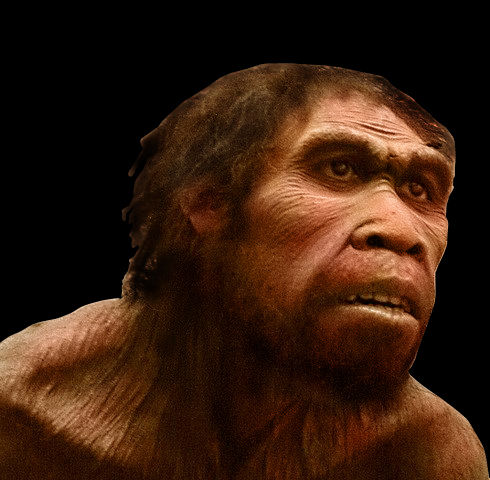
Homo erectus (meaning "upright man," from the Latin ērigere, "to put up, set upright") is an extinct species of hominin that lived throughout most of the Pleistocene, with the earliest first fossil evidence dating to around 1.9 million years ago and the most recent to around 143,000 years ago. The species originated in Africa and spread as far as Georgia, India, Sri Lanka, China and Java. There is still disagreement on the subject of the classification, ancestry, and progeny of H. erectus, with two major alternative classifications: erectus may be another name for Homo ergaster, and therefore the direct ancestor of later hominids such as Homo heidelbergensis, Homo neanderthalensis, and Homo sapiens; or it may be an Asian species distinct from African ergaster. Some palaeoanthropologists consider H. ergaster to be simply the African variety of H. erectus. This leads to the use of the term "Homo erectus sensu stricto" for the Asian H. erectus, and "Homo erectus sensu lato" for the larger species comprising both the early African populations (H. ergaster) and the Asian populations.
1.8 to - 1.3 Million BC, ( HOMO ERGASTER ) (18 to 13 Lakhs) of years ago
Homo ergaster (meaning "working man") or African Homo erectus is an extinct chronospecies of Homo that lived in eastern and southern Africa during the early Pleistocene, between 1.8 million and 1.3 million years ago.[1] There is still disagreement on the subject of the classification, ancestry, and progeny of H. ergaster, but it is now widely accepted to be the direct ancestor of later hominids, such as Homo heidelbergensis, Homo sapiens, and Homo neanderthalensis and Asian Homo erectus.[2] It is one of the earliest members of the genus Homo, possibly ancestral to, or sharing a common ancestor with, Homo erectus.[3] Some paleoanthropologists consider H. ergaster to be simply the African variety of H. erectus; this leads to the use of the term "Homo erectus sensu stricto" for the Asian H. erectus, and "Homo erectus sensu lato" for the larger species comprising both the early African populations (H. ergaster) and the Asian populations.[4] The latest discoveries go even further claiming that all five contemporary species of early "Homo" in Africa, "Homo habilis", "Homo rudolfensis", "Homo ergaster", and "Homo erectus" are representatives from the same species, best named "Homo erectus", which evolved about 2 million years ago in Africa and expanded through Eurasia, as far as China and Java, where it was first documented from about 1.2 million years ago.[5] The binomial name was published in 1975 by Groves and Mazák. The second part, "ergaster", is derived from the Ancient Greek ἐργαστήρ "workman", in reference to the comparatively advanced lithic technology developed by the species, introducing the Acheulean industry.